
A New Era of Conservation Saving Quolls and Gliders

When conservation biologist, Dr Katarina Mikac, is not navigating night-drones to search for animals in forest canopy, she travels to regional NSW towns with one clear message for farmers and citizen scientists: the survival of Australia's spotted quolls and greater gliders is in their hands.
by Rob Barrel
It's a Sunday afternoon in Tomerong where a gathering of Shoalhaven Landcarers and landowners listens to Dr Mikac describe the quiet hunting behaviours of spotted quolls, whose natural habitat is just up the road from the community hall.
Dr Mikac, a University of Wollongong (UOW) Associate Professor and Chair of the institution's Animal Ethics Committee, explains why the survival of the quoll species depends not on government agencies, but on local communities.
"Private landholders are key to conservation — to keeping native species alive," Mikac said.
"Developers aren’t walking into national parks to fell big old trees, but they will try on urban edges and on private land."
"Only a small portion of Australia is in National Parks; the rest is in private hands.
“Working with private landholders, universities, and government is how we do the best work. "
"Your choices matter. The best conservation now comes from the ground up."
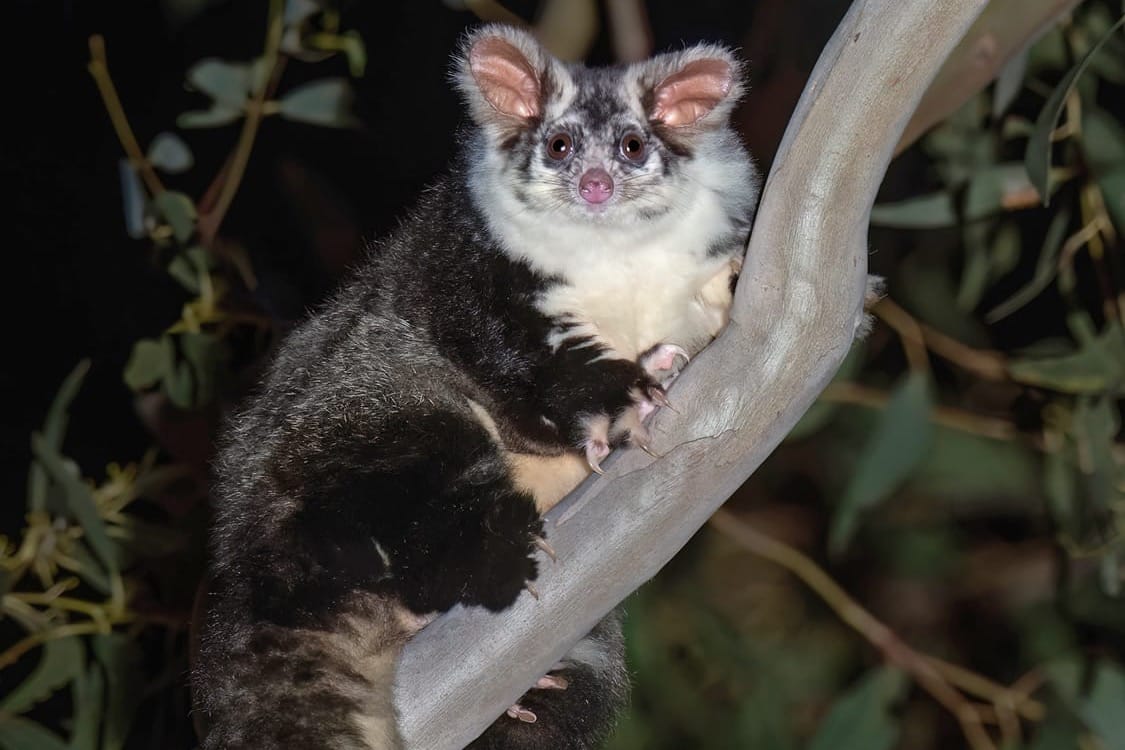
Dr Mikac leads Team Quoll, an 11-year-old research and citizen-science collective working on the ecology and conservation of the spotted-tailed quoll (Dasyurus maculatus) and greater glider (Petauroides volans), both endangered icons of South Coast forests.
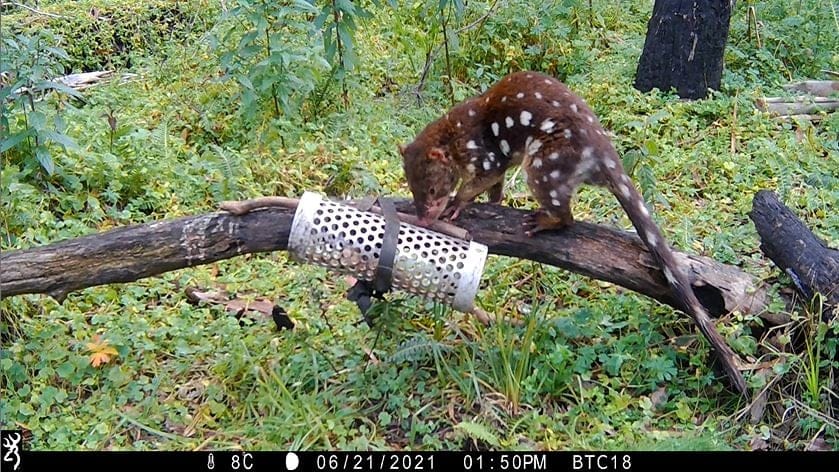
Mikac's team includes postgraduate students, volunteer ecologists, and local property owners who open their gates, and sometimes, their kitchen tables, to assist with scientific fieldwork.
"The goal is to work with Shoalhaven Landcare and the wider community to develop a quoll monitoring program and feed that back into citizen science," Mikac told the forum.
"It’s about learning from each other – not just scientists collecting data, but communities driving the process."
Dr Mikac says the collaboration reflects a 'new era of conservation' where scientists empower farmers, small landholders, and volunteers to gather the evidence that shapes government policy.
Quolls and greater gliders share the same forests. Both rely on old, hollow-bearing trees and a connected canopy.
The Shoalhaven escarpment, running from south of Sydney to the Victorian border, is one of NSW's two stronghold populations of spotted-tailed quoll, according to the species' National Recovery Plan.
"We’ve got healthy forests south of Sydney all the way to Victoria, and that means healthy quoll populations," Mikac said.
"But it doesn’t mean we can stop caring. These are self-sustaining populations now, but they won’t stay that way without vigilance."
Dr Mikac's group also studies the eastern quoll – now extinct on the mainland and surviving only in predator-proof enclosures – and the greater glider, Australia’s largest gliding marsupial, listed as endangered since 2022.
Much of Team Quoll’s work takes place after dark. Using motion-sensor cameras, they capture tens of thousands of images from forest gullies, ridges, and fire trails.
During a 12-month study in northern Morton National Park, they installed 30 Reconyx Hyperfire cameras along the Yarramunmun Fire Trail, baited with chicken drumsticks and positioned near fallen logs — a favourite quoll waypoint.
The project produced 719,000 images in one year, including 6965 quoll images, 10,277 feral cats, 1378 foxes, and 542 dingoes/wild dogs.
"We ended up with 23 individual quolls identified from their spot patterns — one travelled nearly 40 kilometres," Mikac said.
"That’s the kind of movement that tells us how connected the forest still is."
When the Currowan fire swept through the South Coast in 2019–20, Team Quoll lost more than 50 cameras. Once the firegrounds reopened, the scientists returned immediately.
"We were allowed back in while things were still smouldering, but within four weeks quolls were back on camera," Mikac said.
"We don’t fully know how they survived such fast fire fronts. Some places burned slowly, and animals could shift into unburnt patches – gliders, for example, can move to higher elevations or moist gullies."
Mikac's data showed about 35 individual quolls, just in western Monga National Park, during that period — a sign, she said, of 'remarkable resilience'.
However, Mikac's cameras also revealed an unexpected threat.
"We were very shocked at how many cats we got at Morton — over 10,000 images. That was two or three years after the fires."
"The forest looks green again, but the predators bounce back faster than the natives."
Dr Mikac says the biggest challenge is no longer farmers, as they are increasingly engaged in conservation and habitat management to improve biodiversity on their properties. The biggest threat is land clearing on urban fringes.
"From a conservation scientist’s perspective, it’s not the farmers — it’s the developers."
"There’s been a shift on farms toward best practice. The problem now is urban expansion and developers who cut an old-growth tree and stick up a box as a supplementary habitat.
"We’re working to show how important old trees are (even 30–50-year-olds), and that a nest box cannot replace a 150-year-old tree."
"You can’t replace a 150-year-old tree with a nest box, you just can’t. Even a 50 or 70-year-old tree is only a breath away from being a hollow-bearing tree. Those are homes for gliders and quolls."
Mikac regularly acts as an expert witness for the Environmental Defenders Office, providing evidence in forestry and development cases, and she is sometimes asked which trees to keep and which to sacrifice
"I’m tearing my hair out: keep all the trees!" she said.
"On private land, you can decide, 'I’m keeping all the trees.' which become more powerful every year.
"Each tree, each log, each connection counts."
"Conservation is no longer something that happens behind fences. It’s about all of us — sharing knowledge, restoring habitat, and keeping these incredible animals part of our landscape.
"National parks are already locked up. It’s what happens on private land that will make or break these species’ survival, where people can say, ‘No, that's not happening here’."
Among the participants in Mikac's Tomerong forum was Duncan McMaster, who spoke about the rewilding project at the Scots College Bannockburn property near Culburra. Bannockburn has set aside an 80ha fenced area of paddock and bush where 15 Eastern Bettong have been released, and eastern quolls are next.
Mr McMaster said the project 'is about getting them beyond the fence'.
"It’s not about keeping them within enclosures. These animals have to learn to adapt to our environment, because unfortunately, there’s not going to be any 'wild west' left — we’re the problem. So they have to learn to live with what we’ve got now."
Absurdly, the rewilding project at Bannockburn is funded by one of Shoalhaven's largest private landowners, the Halloran Trust, and its development arm, Sealark, which plans to clear-fell forest to sell empty lots on 47 ha in Culburra Beach, and 38 ha in Callala Bay.
Both those Halloran subdivision sites contain mature hollow-bearing trees and numerous endangered or threatened species, living less than 5km away from Bannockburn's rewilding experiment.
If the Halloran plans go ahead, whichever direction animals go after leaving the protection of Bannockburn, they will quickly run into bare areas without connectivity of large trees, but wth many dangerous cats and dogs.
The Bannockburn estate, largely cleared for farming, was gifted by the late Warren Halloran, to Scots College as a coastal country campus for the elite boys' private school.
Scots is one of four key beneficiaries of the $129 million Halloran Trust, which boasts ACNC charity status despite the small fraction of its earnings assigned to charitable endeavours.
The Halloran Trust has said it will 'eventually' gift 517 ha of its landholdings to National Parks. This offer encouraged the NSW Government to approve the extremely controversial 2022 residential rezoning of the forest Callala locals affectionately know as the 'Glider Forest'.
That land gift has not happened. But the Halloran Trust is currently earning millions of dollars from biodiversity credit trading on those private 'biobank' forests between Callala and Culburra.
Halloran's healthy coastal forests marked for development contain exactly the mix of young and old hollow-bearing trees that Dr Mikac has identified as critical to the survival of gliders and quolls, and serve as biodiversity corridors to protected National Parks.
There is widespread community anger across Callala, Culburra and in the Jerrinja Local Aboriginal Land Council over Scots College investing in rewilding native species on its cleared land, while its benefactor profits from destroying neighbouring healthy forests far larger in area and more biodiverse than the rewilding site.
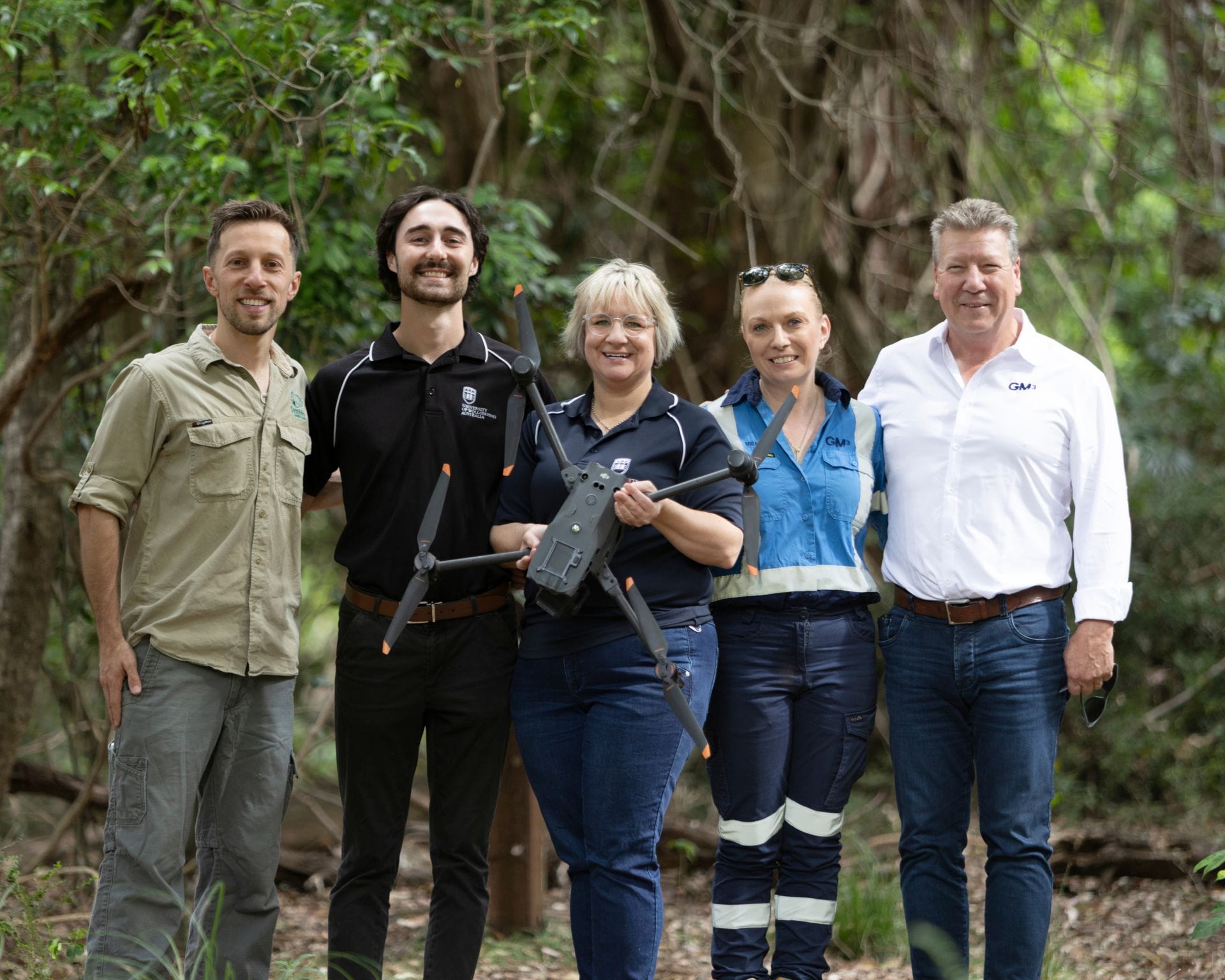
Dr Mikac is not part of the Bannockburn rewilding plan or any community campaign to protect local forests. She wants more science – at the grassroots and institutional level.
Team Quoll’s research is guided by the National Recovery Plan for the Spotted-tailed Quoll, which outlines specific actions to halt population decline — from mapping habitat corridors to reducing fragmentation on private land.
"I don’t just say, ‘Wouldn’t it be nice to do something on quolls?’ I go to the recovery plan and ask, ‘What actions are we told to do?’" Mikac explained.
"It’s a blueprint — not just for scientists but for communities applying for funding.
The plan allows local groups to align projects with national conservation objectives.
"If you can say, ‘Under Action 3.1 we’re reducing habitat loss on private land,’ it’s powerful," Mikac said.
"That’s how you get grants, partnerships and results."
Dr Mikac welcomed the recent release of the Greater Glider Recovery Plan, but said it remains an advisory document rather than binding law.
"Recovery plans are a guide. They’re not a legal instrument — yet. But if we don’t even have one, it’s a free-for-all."
Environmental groups recently took the former Federal Environment Minister to court to force the release of the Greater Glider recovery plan.
According to Mikac, the recovery plan has influence, even without legal clout.
"It’s useful in the Land and Environment Court. It gives weight to decisions and shows what science supports.”
Dr Mikac credits Landcare for bridging the gap between research and reality.
"Landcare networks know every creek, every farm, every person. They’re the ones who get the cameras out, the trees planted, and the data moving."
She’s also working with engineers at the university to test solar-powered and AI-assisted cameras that can identify species in real time and upload data via satellite.
"It’s not just fancy tech. It means faster results, less manual work, and alerts when something changes — like a cat invasion or a glider returning."
For Dr Mikac, conservation is about fieldwork plus communication. Her team will continue working with Shoalhaven Landcare, local councils, and private landholders to expand camera monitoring, predator control, and habitat restoration projects across the South Coast.
Locals interested in joining the monitoring network can contact Shoalhaven Landcare to host a camera trap, contribute observations, or assist with Team Quoll's data sorting.
Rob Barrel is President of Callala Matters, a group advocating for community-led sustainable planning and conservation of Callala's biodiverse forest and marine habitats, especially the local Glider Forest, home to endangered Greater Gliders as well as yellow-bellied, sugar and feathertail gliders.