
Ecological Risks of Cultivating Mytilus galloprovincialis in Jervis Bay Marine Park
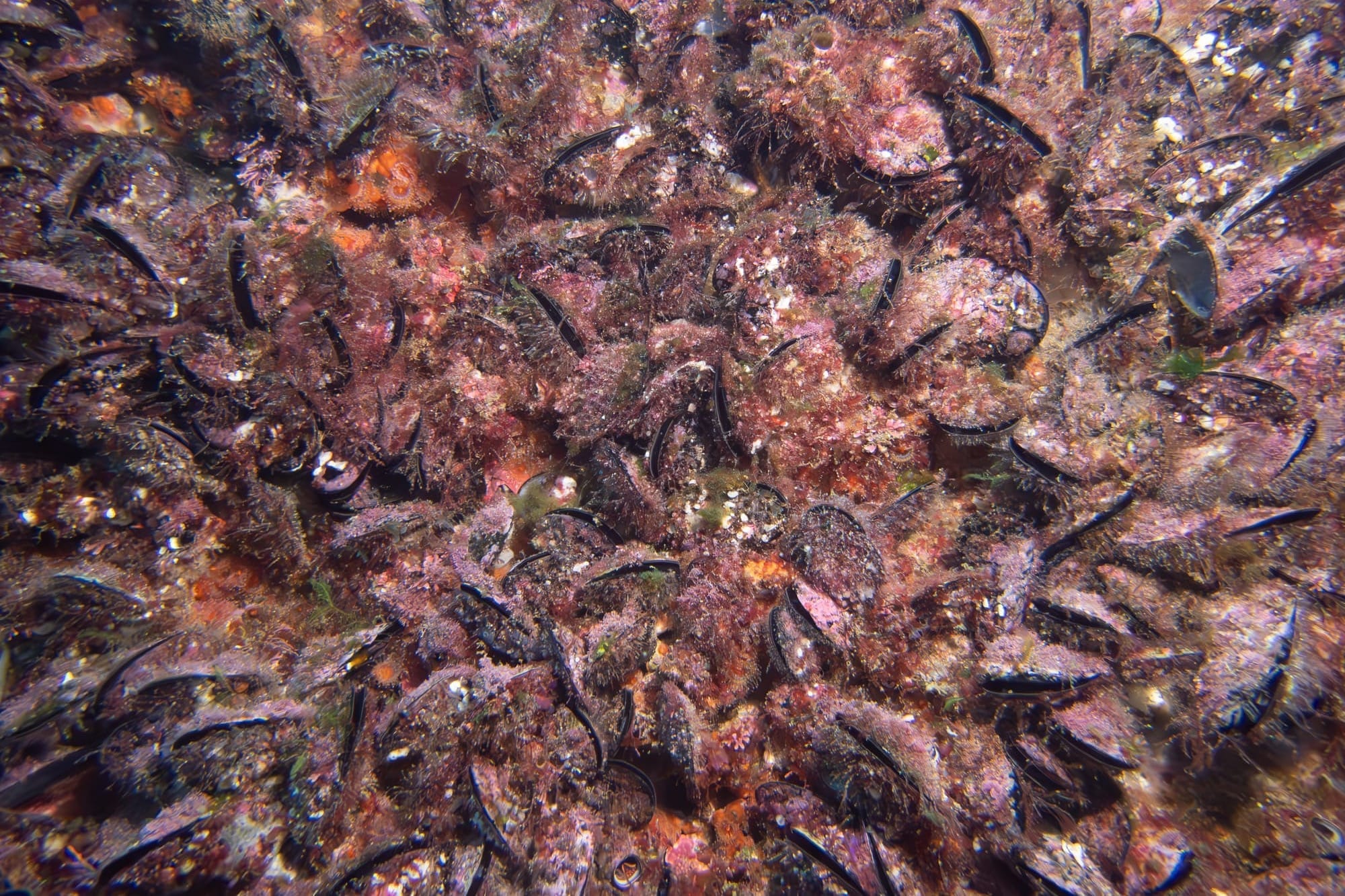
An analysis of nine scientific papers provided to the community by Sam Gordon, Managing Director of Blue Harvest/South Coast Mariculture/ Jervis Bay Mussels, to ascertain whether commercial cultivation of M. galloprovincialis in the Jervis Bay Marine Park poses ecological risk. (Rob Barrel, Callala Matters)
1. Competitive Ecological Impacts on Native Mussels and Associated Reef Species
Introducing M. galloprovincialis into Jervis Bay raises serious concerns about competition with native mussel species and other reef organisms. In other regions, the Mediterranean mussel has proven to be a highly competitive invader that can displace native mussels and dominate space on rocky reefs. For example, on the coast of South Africa, M. galloprovincialis rapidly overgrew and competitively displaced several indigenous mussel species due to its superior physiological performance (fast growth and high reproduction). Within two decades of its accidental introduction, it spread along hundreds of kilometres of shoreline and became the dominant mussel across the west coast, effectively replacing native mussel populations. A similar pattern is seen in California, where the invasive M. galloprovincialis has displaced the native Mytilus trossulus over most of central and southern California’s coastline (Invasive and native blue mussels (genus Mytilus) on the California coast_ The role of physiology in a biological invasion.pdf). This displacement is driven by the invader’s greater tolerance to warmer conditions – M. galloprovincialis thrives in warm, wave-exposed habitats where the native mussels cannot, allowing it to monopolise mussel bed habitats in those areas (Invasive and native blue mussels (genus Mytilus) on the California coast_ The role of physiology in a biological invasion.pdf). In Australia, the Mediterranean mussel threatens to outcompete the native smooth-shelled mussel (M. planulatus): genetic surveys show that in many invaded sites over 64% of mussels are the non-native M. galloprovincialis and only ~13% remain pure native M. planulatus, indicating the invader has largely supplanted the native species in abundance (Zbawicka et al 2022 Combined threats to native smooth shelled mussels in Australia.pdf). These examples illustrate that M. galloprovincialis can successfully outgrow and outcompete native mussels, leading to a sharp decline of native mussel populations wherever it becomes established.
The effects of this competitive dominance extend to other reef species that share habitat with mussel beds. As M. galloprovincialis forms dense blankets on rocky substrates, it crowds out or smothers many large space-occupying organisms (such as barnacles, limpets, and native mussels) that would otherwise occupy the reef (Can we predict the effects of alien species_ A case-history of the invasion of South Africa by Mytilus galloprovincialis (Lamarck).pdf). In South Africa, researchers observed that the invading mussels rapidly displaced large indigenous space occupiers on the intertidal rocks (Can we predict the effects of alien species_ A case-history of the invasion of South Africa by Mytilus galloprovincialis (Lamarck).pdf). This can reduce habitat for those native reef species that cannot attach to or overgrow the mussel shells. On the other hand, the mussel beds themselves create a new structured habitat that some smaller organisms can exploit. Some small invertebrates and algae are able to settle on or between the shells of M. galloprovincialis, gaining a substitute substratum in the mussel bed. However, this refuge is only available to species “small enough to live and reproduce on the mussels”, meaning many larger reef species are still excluded. Overall, the shift from a diverse native mussel community to a monoculture of M. galloprovincialis tends to homogenise the reef habitat, favouring species that can tolerate living on mussel shells while eliminating or greatly reducing those that cannot. The invasion thus alters the composition of the reef ecosystem – native mussels and other large sessile organisms decline, and a subset of epibiotic species that can utilise mussel beds may increase (Can we predict the effects of alien species_ A case-history of the invasion of South Africa by Mytilus galloprovincialis (Lamarck).pdf). This change in community structure is a direct ecological impact of the farming escapees: the cultivated M. galloprovincialis would likely spread and out-compete the local M. planulatus and other benthic space-holders in Jervis Bay, leading to similar community shifts observed elsewhere.
2. Genetic Risks: Hybridization with Native M. planulatus and Introgression
Beyond direct competition, M. galloprovincialis poses a serious genetic threat to the native blue mussel (Mytilus planulatus) through interbreeding and introgression. M. galloprovincialis and M. planulatus are closely related and can successfully hybridise, blurring species boundaries. Studies in south-eastern Australia have documented that introduced M. galloprovincialis have extensively hybridised with the local M. planulatus. Notably, there have been multiple independent introductions of M. galloprovincialis in Australia, and each introduction led to immediate admixture with the native species. Genetic analysis of mussel populations in New South Wales (e.g. Sydney Harbour and Batemans Bay) revealed that essentially all individuals are of mixed ancestry, containing 33–82% northern hemisphere (M. galloprovincialis) genetic lineage in their genomes. This indicates that widespread hybridisation has occurred – the farmed or introduced M. galloprovincialis did not remain separate but bred with M. planulatus, producing hybrids that now dominate these populations. Researchers found evidence of at least two distinct invasion lineages (one of Mediterranean origin, one Atlantic) in Australia, and both have extensively introgressed their genes into native mussels. This genetic mixing is especially alarming because M. planulatus represents a lineage that had been isolated from northern Mytilus for a very long time (on the order of ~100,000 years) (Twin introductions by independent invader mussel lineages are both associated with recent admixture with a native congener in Australia.pdf). The sudden influx of foreign genes from M. galloprovincialis effectively breaks down an evolutionary separation, potentially eroding unique local adaptations that M. planulatus evolved over millennia in Australian waters.
The consequences of this hybridisation are already evident in areas where M. galloprovincialis has been present. Rather than a stable coexistence, the outcome has been the formation of hybrid swarms and a genetic swamping of the native mussel. A 2022 survey across ten sites in southern Australia found that nearly two-thirds of mussels were genetically identified as the invasive M. galloprovincialis, about 22% were hybrids, and only ~13.5% were “pure” native M. planulatus (Zbawicka et al 2022 Combined threats to native smooth shelled mussels in Australia.pdf). Many locations are now overwhelmingly dominated by later-generation hybrids, with one analysis suggesting 70% of individuals at most sites are F₂ hybrid descendants (and no first-generation crosses detected, implying the mixing occurred in the past and now hybrids breed with hybrids) (Zbawicka et al 2022 Combined threats to native smooth shelled mussels in Australia.pdf). In effect, the native M. planulatus has been almost genetically absorbed – its gene pool inundated by M. galloprovincialis alleles to the point that finding an unmixed wild population of M. planulatus is increasingly unlikely (Zbawicka et al 2022 Combined threats to native smooth shelled mussels in Australia.pdf). Scientists report that “most sites are now heavily invaded and identifying ‘pure’ populations of M. planulatus is becoming increasingly difficult in Australia.” (Zbawicka et al 2022 Combined threats to native smooth shelled mussels in Australia.pdf) This loss of genetic integrity is a profound impact: the native species is not only reduced in number but is also losing its unique genetic identity through introgression. This scenario could easily unfold in Jervis Bay – if farmed M. galloprovincialis spawn and interbreed with local M. planulatus, the native mussel population could be genetically overtaken. The risk is not just theoretical; it mirrors outcomes in other regions. For instance, in New Zealand the introduced northern hemisphere lineage of M. galloprovincialis has been invading and hybridizing with the native Southern Hemisphere lineage at high rates, posing “a unique threat to native biodiversity” in that system (Blixt 2020 The distribution and relative abundance of the invasive Northern blue mussel M Galloprovincialis in New Zealand.pdf). Likewise, in the Baltic Sea, a related scenario is observed between two other mussel species (M. edulis and M. trossulus), where rampant introgression has resulted in no remaining pure native individuals in some hybrid zones (Local adaptation and species segregation in two mussel ( Mytilus edulis ×× × × Mytilus trossulus ) hybrid zones.pdf). All these cases underscore the genetic peril: aquaculture of M. galloprovincialis in Jervis Bay could facilitate extensive hybridisation with M. planulatus, leading to genomic dilution of the native species and irreversible changes in the genetic makeup of local mussel populations.
3. Broader Ecosystem Effects on Habitat Complexity, Trophic Interactions, and Biodiversity
Ecosystem structure and complexity could also be impacted by cultivating M. galloprovincialis, as mussels are known “ecosystem engineers” on rocky shores. By forming dense beds, mussels add physical structure that can alter habitat complexity, which in turn influences other organisms living within or beneath the mussel bed. Initially, one might expect the introduction of M. galloprovincialis (which forms extensive, layered mussel mats) to increase habitat complexity and potentially enhance local biodiversity. Deep mussel beds create interstitial spaces that could harbour diverse infauna (small animals living in sediments or under the mussels) and epifauna. However, field studies have shown that the replacement of native mussel beds with M. galloprovincialis beds did not boost habitat diversity as anticipated. In South Africa, researchers predicted that the invader’s complex beds would support greater infaunal species richness and biomass, but “in reality, no differences in the biomass, abundance, diversity, or richness of infauna emerged in comparisons of M. galloprovincialis beds with those of indigenous mussels.” The deeper, multilayered beds of the alien mussel did not translate into richer infaunal communities, refuting the hypothesis that habitat complexity alone would elevate biodiversity. Essentially, the invasive mussel beds and the native mussel beds had a similar complement of under-bed organisms, so the overall infaunal community remained unchanged in metrics of diversity. This suggests that while M. galloprovincialis will alter the physical structure of the habitat, it may not provide additional ecological niches beyond those already offered by the native mussel it displaces. In some cases, the invader can even reduce habitat complexity if it leads to monoculture: a single-species mussel blanket might replace a more heterogeneous mix of mussels, barnacles, macroalgae, and bare rock patches that existed before. Such homogenization can lead to a decline in beta-diversity (spatial variability in species) on the reef. Thus, the net effect on biodiversity can be negative – even if total number of species under the mussel bed remains similar, the loss of unique native species (like M. planulatus and associated fauna that depend on it) represents a biodiversity decline. Moreover, because M. galloprovincialis in Australia is a cryptic invader (morphologically similar to the native), its spread can cause unnoticed biodiversity loss; only genetic analysis revealed that what appeared to be continuous “blue mussel” populations were in fact invaded and the native taxa largely replaced (Zbawicka et al 2022 Combined threats to native smooth shelled mussels in Australia.pdf).
In addition to habitat structure effects, the introduction of M. galloprovincialis alters trophic interactions and food web dynamics in the ecosystem. Dense populations of mussels represent a significant new food source for predators and can thus influence predator populations and feeding patterns. In invaded South African shores, the abundance of M. galloprovincialis provided an “additional source of food for higher predators”, including predatory whelks and the endangered African black oystercatcher bird, which feeds on shellfish. These predators benefited from the invader; for example, oystercatchers, which were food-limited, now had far more mussels to consume, potentially boosting their reproductive success or local numbers. This indicates a trophic cascade effect where an invader can indirectly aid certain predators. However, such benefits to predators can come with trade-offs. If predator populations (e.g. whelks) increase due to the ample supply of M. galloprovincialis, they may also exert higher predation pressure on other native prey species, possibly harming those populations. Additionally, M. galloprovincialis can filter large volumes of plankton from the water column; an explosion in its numbers might alter nutrient cycling and competition for planktonic food, potentially impacting other filter feeders. Another aspect is the escape from parasites and diseases that often accompanies invasive species. In the case of M. galloprovincialis in South Africa, it arrived with no native parasites or specialised predators that target it, which allowed its population to grow unchecked. This enemy release meant the invader achieved higher densities than the native mussels ever did, amplifying its ecological impact (e.g., a greater mass of mussels filtering water and occupying space than the system had previously). Over time, the dominance of M. galloprovincialis can lead to a more simplified food web: energy flow becomes concentrated through this single species (as both consumer and prey), and other pathways may diminish if competing filter-feeders or alternate prey are reduced. In summary, biodiversity and trophic balance are at risk – the cultivation of M. galloprovincialis in Jervis Bay could result in a reef community overwhelmingly centered on this one species (and its hybrid progeny), with fewer native species present, and could modify food web interactions by introducing a super-abundant prey that boosts some predators while outcompeting other filter feeders. Such changes underscore the broad ecosystem-scale impacts that go beyond just the loss of the native mussel, potentially affecting habitat complexity, nutrient flow, and the diversity of life in the bay.
4. Aquaculture-Specific Risks: Propagule Pressure, Larval Dispersal, and Expansion Vectors
The act of farming M. galloprovincialis in Jervis Bay would itself amplify the invasion risk by increasing propagule pressure – the number and frequency of mussel larvae and juveniles released into the environment – and by introducing new human-mediated vectors for spread. Intensive cultivation leads to high densities of breeding individuals, which can produce vast numbers of larvae. These larvae are planktonic and can drift with currents, potentially seeding populations far from the farm site. Experience from other regions shows that aquaculture operations can dramatically boost the local abundance and spread of invasive mussels. In New Zealand, for instance, the presence of mussel farms has been linked to a much larger population of invasive M. galloprovincialis (northern lineage) in farming areas than would naturally occur. Surveys found that the relative abundance of the invader on mussel farm structures was as high as on adjacent natural shores, and critically, the extra habitat provided by farm infrastructure (ropes, floats, etc.) led to a significant increase in the overall mussel population size (both invader and native) in the region. In other words, the farm created new living space that allowed many more mussels to exist than the environment alone would support, directly increasing propagule output. Researchers noted that this resulted in “a much larger M. galloprovincialis population in this region than would be otherwise present due to the aquaculture facilities”. With more adult mussels packed in, spawning events release enormous quantities of larvae. Those larvae can travel. M. galloprovincialis has a long-lived planktotrophic larval stage, and in South Africa this enabled remarkably rapid dispersion – the species spread about 115 km per year along the coastline following prevailing currents. Such dispersal ability means that larvae spawned in Jervis Bay’s farms would not stay in Jervis Bay: many could ride the East Australian Current or coastal eddies and settle tens of kilometres away. Over time, continuous larval seeding from an aquaculture operation can populate one bay after another. Indeed, modelling and field observations indicate that even a single introduction can radiate outward via larval drift; higher propagule pressure from aquaculture makes this radiation even more certain. Thus, the sheer reproductive output from a mussel farm greatly raises the risk of establishing feral populations of M. galloprovincialis in surrounding waters.
Aquaculture activities also create additional vectors for spread beyond natural larval drift. The logistics of farming – movement of equipment, stock, and vessels – can inadvertently transport mussels to new locations. Fouling on boat hulls, cages, and ropes can carry juvenile mussels or seed mussels when gear is relocated or boats travel to other ports. In New Zealand’s case, it was found that intra-national maritime traffic (boat movement within the country) is a more important vector for spreading the invasive mussel than international shipping. This underscores that once aquaculture or an invasion is established in one area, human movements can rapidly ferry the species to other domestic regions (e.g., from one bay or marina to the next). If Jervis Bay becomes an aquaculture centre for M. galloprovincialis, there is a credible risk that mussels could hitchhike on work boats, service vessels, or even on shipments of mussel seed to other farms, thereby jumping to new areas along the Australian coast. Moreover, there is precedent for deliberate translocation via aquaculture: in South Africa, M. galloprovincialis was intentionally moved from the invaded west coast to the south coast to establish a mariculture industry, effectively introducing the mussel to a region it hadn’t yet colonised. This historical case shows how aquaculture interest can spread an invasive species beyond its initial range. A similar scenario could happen in Australia – if mussel farming with M. galloprovincialis in Jervis Bay proves economically successful, there may be pressure to expand operations to other bays or states, potentially leading to sanctioned transfers of stock (and with them, the invader). Even without intentional spread, the day-to-day operations in Jervis Bay will increase the likelihood of M. galloprovincialis escaping containment. Storms or equipment failure could release farmed mussels; handling and harvesting can dislodge some that fall overboard; and any spawning that occurs in the farm will send larvae into the wild. Every such escape or release adds to the propagule pressure on the environment, compounding the invasion risk. In summary, the establishment of M. galloprovincialis aquaculture introduces continuous and elevated opportunities for the mussel to spread: not only will there be more larvae in the water, but human agency (boats, gear, and potentially deliberate transplantation) can carry the species far beyond Jervis Bay. This combination of high propagule supply and multiple expansion vectors makes it very likely that an aquaculture operation would serve as a launching point for a broader invasion.
5. Regional Spread and Risk to Wider Southern Australian Ecosystems
Once M. galloprovincialis gains a foothold in a new location, it has demonstrated an ability to spread rapidly and establish across broad geographic areas, which raises alarms that a Jervis Bay introduction could eventually affect ecosystems all along the southern Australian coast. The invasion history in South Africa is instructive: after appearing in a single harbour in the mid-1970s, M. galloprovincialis expanded its range at an estimated 115 km per year, soon blanketing the entire west coast of South Africa and even reaching into Namibia. Within about a decade, it covered hundreds of kilometres of coastline, aided by favourable currents and its robust colonising ability. A similar pattern is evident on other continents. In North America, M. galloprovincialis introduced to southern California did not stay confined to one bay – it spread northwards along the U.S. Pacific coast, year by year displacing the local mussels further up the coast (Invasive and native blue mussels (genus Mytilus) on the California coast_ The role of physiology in a biological invasion.pdf). In the Southern Hemisphere, M. galloprovincialis has already begun to extend across temperate Australia. Notably, multiple introductions (e.g., in Western Australia and in New South Wales) have effectively sown the seeds of a pan-southern Australian distribution. Genetic studies reveal that populations of M. galloprovincialis (and hybrids) are now found from the Pacific coast of NSW all the way to the Indian Ocean coast of WA, with no apparent genetic breaks across ~4400 km of coastline (Zbawicka et al 2022 Combined threats to native smooth shelled mussels in Australia.pdf). The lack of population structure across such a vast distance is attributed to “high levels of mixing (‘genetic swamping’) resulting from the introduction and spread of invasive M. galloprovincialis at so many Australian sites”, which has erased the regional genetic differences that once existed among native mussels (Zbawicka et al 2022 Combined threats to native smooth shelled mussels in Australia.pdf). In other words, the invader has already begun to unite what were previously separate ecosystems into one continuous invaded range. This shows both the capability of M. galloprovincialis to colonise widely separated locales and its tendency to proliferate to the point of dominating those ecosystems. Additionally, global evidence points to human facilitation in its spread: M. galloprovincialis’ disjunct antitropical distribution (appearances in South Africa, South America, Australasia, etc., far from its native Europe) is best explained by human-mediated introductions rather than natural dispersal (Genetic relationships of Mytilus galloprovincialis Lmk. populations worldwide_ evidence from nuclear-DNA markers.pdf). For instance, genetic markers indicate that Chile’s mussel populations are virtually identical to those from the Mediterranean, implying mussels were transported across the equator by ships or other human means (Genetic relationships of Mytilus galloprovincialis Lmk. populations worldwide_ evidence from nuclear-DNA markers.pdf). Similarly, South Africa’s populations match lineage from the NE Atlantic, reflecting introduction via maritime activities (Genetic relationships of Mytilus galloprovincialis Lmk. populations worldwide_ evidence from nuclear-DNA markers.pdf). Once established in those regions, the species then radiated along the coasts. This history is a cautionary tale for southern Australia: any new focus of M. galloprovincialis (such as Jervis Bay) could serve as a springboard for further expansion along Australia’s shores, especially given the high connectivity of coastal waters and active coastal shipping/fishing routes.
In the context of Jervis Bay Marine Park, the risk is that a local aquaculture introduction will not remain local. Jervis Bay is located on the east coast of Australia, not far from areas where M. galloprovincialis has already been detected (e.g., Sydney Harbour to the north and Batemans Bay to the south). An infusion of propagules from the bay’s mussel farm could bolster the invader’s presence along the NSW coast, effectively filling in any gaps in distribution. From there, natural currents could carry larvae southward into Victorian waters or northward towards the central coast of NSW. Over the longer term, there is concern that the invader could reach high-value conservation areas such as Tasmania – which until now has been a stronghold for the native M. planulatus. Tasmania’s mussel populations have shown relatively little invasion so far and retain unique genetic characteristics. However, scientists warn that continued spread of M. galloprovincialis is possible and are already calling for monitoring of Tasmanian sites for any incursion of the invader and its further spread (Zbawicka et al 2022 Combined threats to native smooth shelled mussels in Australia.pdf). The establishment of M. galloprovincialis in Jervis Bay would heighten that concern, as it brings a large source of larvae closer to the Tasman Sea pathway. If the species (or its hybrid larvae) find their way to Tasmania’s waters – whether by currents or via human transport of mussel stock or fouled vessels – it could complete the invasion of southern Australia, potentially displacing the last predominantly native populations. Indeed, multiple studies have highlighted that most mainland sites are already invaded or hybridised and that finding purely native populations is exceedingly difficult (Zbawicka et al 2022 Combined threats to native smooth shelled mussels in Australia.pdf). This means the few remaining refuges of M. planulatus (such as parts of Tasmania) are especially precious and vulnerable. Any expansion from Jervis Bay could contribute to what researchers term “genetic swamping” on an Australia-wide scale, whereby the invasive genotype overwhelms native ones across the entire region (Zbawicka et al, 2022 Combined threats to native smooth shelled mussels in Australia.pdf).
From an ecological standpoint, allowing M. galloprovincialis to spread unchecked would lead to similar ecological impacts propagating through each new area: loss of native mussels, altered community structure, and hybridisation. The risks are not confined to Jervis Bay – they radiate outward to all ecosystems connected by water or human travel.
Conclusion
The commercial cultivation of M. galloprovincialis in Jervis Bay poses substantial ecological risks. It threatens to outcompete and absorb the native mussel, alter habitat and food web dynamics in the bay, and act as a nucleus for the species’ spread to other parts of southern Australia (Zbawicka et al, 2022 Combined threats to native smooth shelled mussels in Australia.pdf). Given the invasive history of this mussel, its high reproductive output, and the facilitation by aquaculture activities, there is a strong likelihood that what begins in Jervis Bay would not stay in Jervis Bay – it could become an ecological problem for the broader region, undermining marine biodiversity and ecosystem integrity across a wide geographic scale.
Sources:
- Branch, G.M. & Steffani, C.N. (2004). Can we predict the effects of alien species? A case-history of the invasion of South Africa by Mytilus galloprovincialis. Journal of Experimental Marine Biology and Ecology, 300: 189–215.
- Popovic, I. et al. (2020). Twin introductions by independent invader mussel lineages are both associated with recent admixture with a native congener in Australia. Evolutionary Applications, 13(3): 515–532 (Twin introductions by independent invader mussel lineages are both associated with recent admixture with a native congener in Australia.pdf).
- Zbawicka, M. et al. (2022). Combined threats to native smooth-shelled mussels (genus Mytilus) in Australia: bioinvasions and hybridization. Zoological Journal of the Linnean Society, 194(4): 1194–1211 (Zbawicka et al 2022 Combined threats to native smooth shelled mussels in Australia.pdf)
- Blixt, I.R. (2020). The distribution and relative abundance of the invasive Northern blue mussel, M. galloprovincialis, in New Zealand: management implications. MSc Thesis, Victoria University of Wellington.
- Lockwood, B.L. & Somero, G.N. (2011). Invasive and native blue mussels on the California coast: The role of physiology in a biological invasion. J. Exp. Mar. Biol. Ecol., 400(1-2): 167–174 (Invasive and native blue mussels (genus Mytilus) on the California coast_ The role of physiology in a biological invasion.pdf).
- Daguin, C. & Borsa, P. (2000). Genetic relationships of Mytilus galloprovincialis Lmk. populations worldwide: evidence from nuclear DNA markers. In Bivalve Systematics and Evolution, Geological Society, London, Special Publications 177: 389–397 (Genetic relationships of Mytilus galloprovincialis Lmk. populations worldwide_ evidence from nuclear -DNA markers.pdf).
- Riginos, C. & Cunningham, C.W. (2005). Local adaptation and species segregation in two mussel (Mytilus edulis × Mytilus trossulus) hybrid zones. Molecular Ecology, 14(2): 381–400 (Local adaptation and species segregation in two mussel ( Mytilus edulis ×× × × Mytilus trossulus ) hybrid zones.pdf).
- Hilbish, T.J. et al. (2000). Origin of the antitropical distribution pattern in marine mussels (Mytilus spp.): routes and timing of transequatorial migration. Marine Biology, 136: 69–77 (Origin of the antitropical distribution pattern in marine mussels (Mytilus spp.)- routes and timing of transequatorial migration.pdf).
- Gardner, J.P.A. et al. (2016, as cited in Blixt 2020). Higher rates of introgression by a globally invasive mussel hybridize with a native lineage in New Zealand. (Referenced in context) (Blixt 2020 The distribution and relative abundance of the invasive Northern blue mussel M Galloprovincialis in New Zealand.pdf).