Submarines and Seabeds: How AUKUS Binds Australia to a Battle over Precious Pacific Minerals
Anthony Albanese’s latest diplomatic flirtation with Donald Trump has aroused more than a few voyeurs.
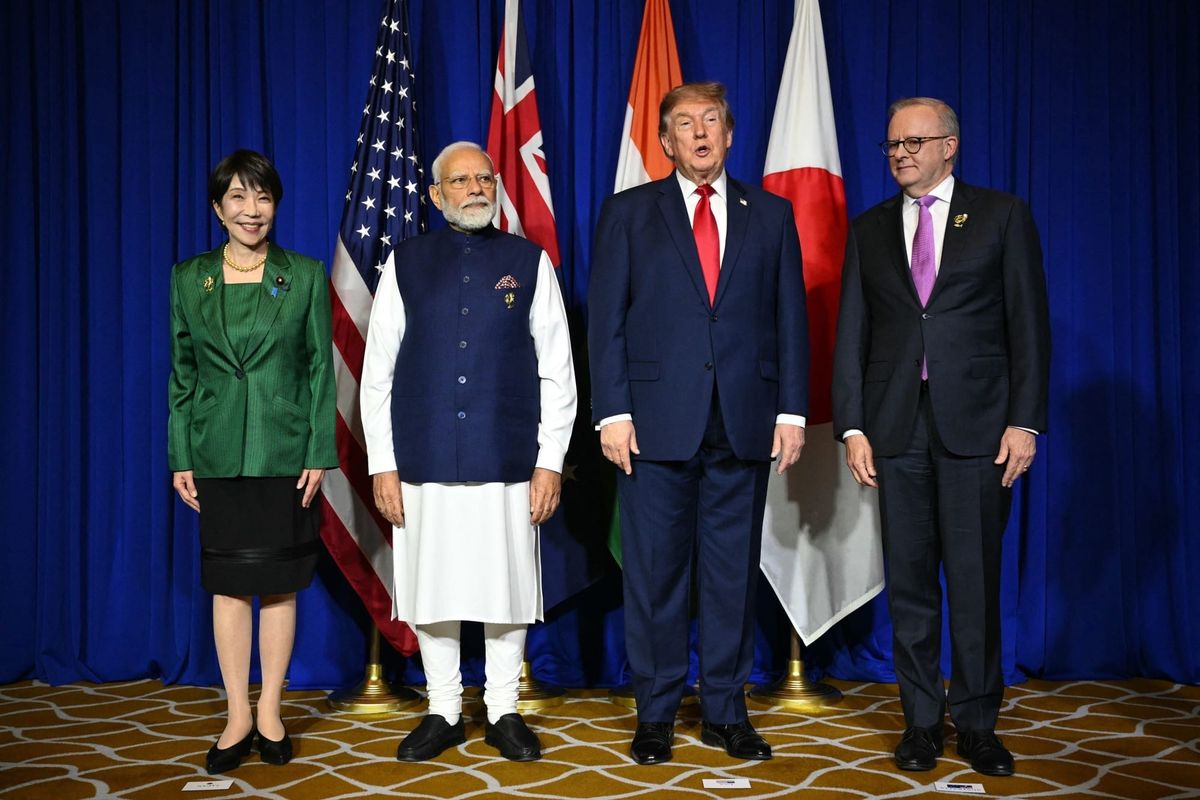
“We’re making rare earths at a level we’ve never made before … we’re going to catch them in 10 months,” US President Trump declared at the November 17 Quad leaders’ press conference in Manila.
By ‘them’, he meant China.
The Quadrilateral Security Dialogue—or Quad—is a strategic and security partnership of sorts between four Indo-Pacific democracies: Australia, India, Japan, and the United States.
During the media appearance, President Trump sang his own praises while the three Prime Ministers provided little in backing harmonies.
Japan’s Sanae Takaichi smiled politely at the cameras, India’s Narendra Modi stared stoically ahead, and Australia’s Albanese glanced nervously at Trump.
“They are too—Japan is, India is, and I know you are,” Trump nodded at Albanese.
“We are,” Albanese murmured reassuringly, shifting his weight from left to right.
Prime Minister Albanese might not have heard, by then, about two important developments behind this diplomatic display—and why Australia is caught in a strategic net between the USA, China, and our closest neighbours in the Pacific Islands.
But he definitely knew about the personal interests of Australia’s former PM, Scott Morrison, in the critical minerals industry—especially his deep-sea mining ambitions in the South Pacific.
It was a busy week in the murky realm of deep seabed mining, so now is a good time to illuminate its connection to Australia’s most important and expensive defence alliance: AUKUS.
Whether we are examining military pacts or environmental impacts, surging demand for critical minerals and rare earth elements is pushing deep-sea mining into sharper focus.
Green metals. Critical minerals. Rare earth elements.
Sounds polished? But it’s really about the dirty work of digging up the planet’s most remote and fragile ecosystems to extract the raw materials powering electrified, data-driven economies—and modern military intelligence and weaponry.
It’s about mining these 17 elements (or 60 minerals, depending on who’s counting) fast enough to keep pace with the AI boom, battery-dependent renewable energy, and China’s expanding global dominance.
It’s also about AUKUS.
While most Australians remain fixated on the controversial nuclear submarine deal, insiders have already shifted their enthusiasm to the pact’s second “pillar”: accelerating advanced military technology.
The hundreds of billions of dollars projected for a phantom submarine fleet—and the spectre of war used to justify that spend—have distracted AUKUS critics from the massive environmental and economic stakes of Pillar II and the critical minerals driving it.
I attended two of Greens senator David Shoebridge’s AUKUS forums and read the report from Peter Garrett’s independent AUKUS Public Inquiry. In their efforts to sink the submarine deal, opponents are burying the minerals lead.
Right now, Australia looks like the belle of the geopolitical ball—courted into an overlapping web of alliances in which Western and Indo-Pacific powers (the US, UK, Canada, Japan, South Korea, India, and the EU) are teaming up in various configurations to lock in mineral supplies.
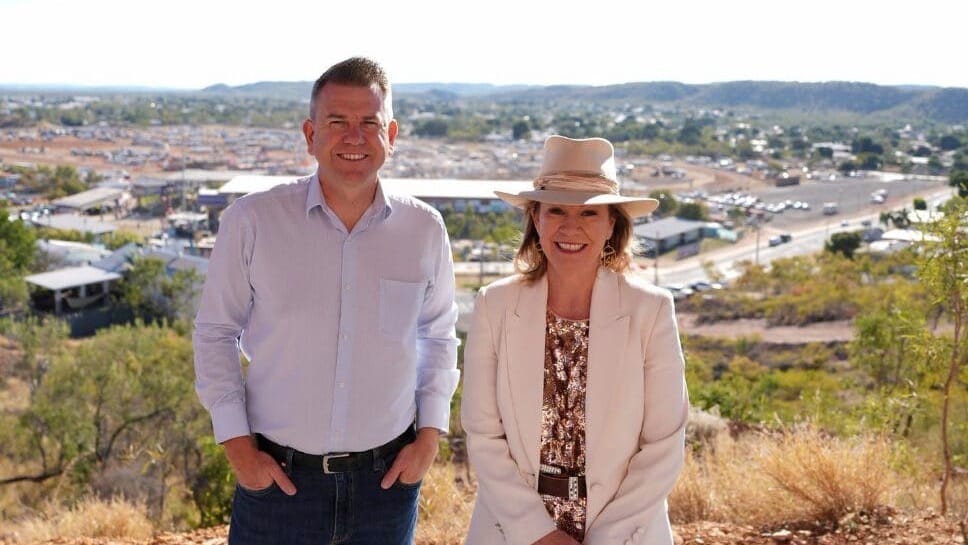
Domestically, Australia’s critical minerals strategy focuses on onshore mining and building local refining facilities. Just this week, nearly $1 million in federal, Queensland state, and local council funding was announced for a Mount Isa research centre dedicated to metallurgical testing and processing.
For several of Australia’s Pacific Island neighbours, however, mineral wealth lies on the deep seabed—a reality Canberra seems reluctant to confront. More on that shortly.
Access to critical minerals and rare earths underpins everything from AI hardware, batteries, and magnets to electric vehicles, medical lasers, and next-generation weapons. According to the International Energy Agency’s Global Critical Minerals Outlook 2024, demand for clean-energy minerals under a Net Zero Emissions by 2050 scenario nearly triples by 2030 and quadruples by 2040, reaching almost 40 million tonnes a year.
Over the past four years, Australia has quietly signed nine bilateral critical-mineral agreements and joined five US- and G7-led coalitions, including FORGE, Pax Silica, and the Quad. Together, they form a buyers’ club designed to bankroll Australian mines and refineries and loosen China’s grip on global supply chains and processing.
AUKUS aims to counter China's Indo-Pacific military influence. Although Australia’s mineral pacts are not written directly into the AUKUS treaty, they serve as the hidden lifeblood of Pillar II.
As Dr Gerald Mako, a research affiliate at the Cambridge University Central Asia Forum, put it:
“Policymakers need to embed critical-minerals security more explicitly into the AUKUS Pillar 2 framework.”
Michael Sharpe, CEO of the AUKUS Forum, echoed that view:
“This isn’t just a trade deal. It’s a pillar of strategic deterrence. Just as shipyards build submarines, critical mineral corridors build the resilience behind them.”
John Coyne of the Australian Strategic Policy Institute went further:
“AUKUS should be the premier minilateral mechanism for creating resilient critical-mineral supply chains for each of the partners … Secure access to processed critical minerals enables the emerging technologies that will ‘win’ or, better still, deter the next global war."
Autonomous undersea drones, hypersonic weapons, quantum navigation, and military AI all rely on secure supplies of rare earths and critical minerals. By pairing multi-billion-dollar submarine commitments with mineral alliances, Canberra is effectively underwriting America’s technological arms race with China using Australian dirt.
Yet Australia’s economy—and particularly its mining sector—remains deeply tied to Beijing.
Roughly 95 per cent of Australian lithium is still shipped to China for refining, and Beijing controls around 90 per cent of global rare-earth processing—a complex, heavily polluting business. According to Associate Professor Umair Ghori of Bond University’s Centre for Commercial Law and Governance, every tonne of rare earths produced can generate roughly 2,000 tonnes of waste, including residues toxic to soil and water.
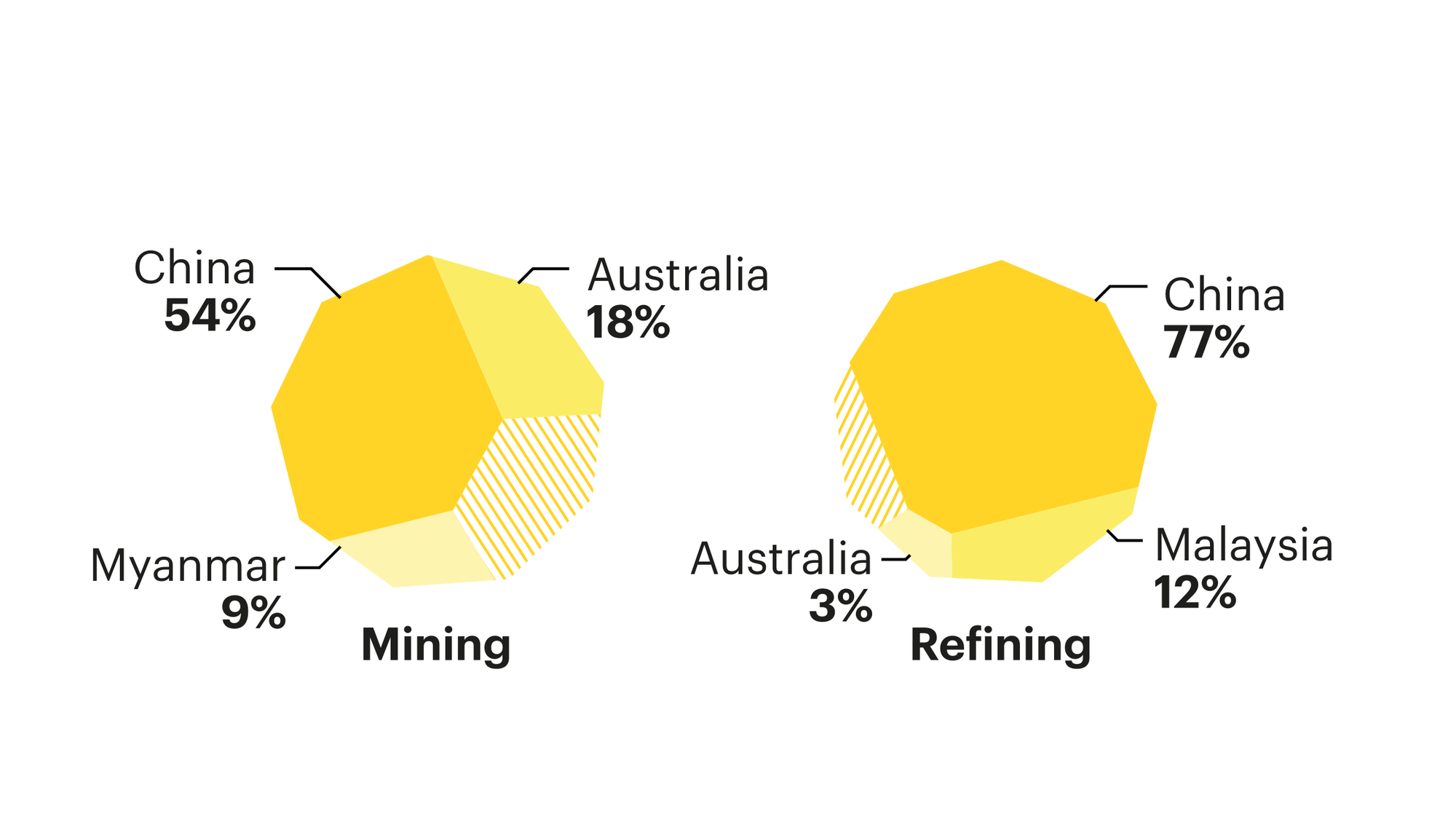
Australia’s “dig-and-ship” model leaves us caught between our allies’ push for non-Chinese supply and China’s chokehold over refining. And as Beijing builds alternative supply chains, it needs Australian rocks less—eroding our leverage with the superpower that has been our largest trading partner for 17 years.
Which brings us to the deep, dark ocean surrounding the islands of the South Pacific—and those two other major stories from November 17.
On the same day Albanese stood beside Trump in Manila—bragging about that 10-month rare earths target—China announced it had completed the world’s first large-scale trial to mine critical minerals from the deep seafloor between Hawaii and Mexico.
Simultaneously, a US federal judge ruled that the Trump administration had violated environmental law by approving a mining lease sale across 31 million acres of seabed near American Samoa.
Together, those developments cast an ironic shadow over the White House’s Quad Leaders’ Summit joint press release:
“Together, we have shown that the Quad is a force for good and a partnership of action, committed to peace, stability, and prosperity. We strongly oppose any destabilizing or unilateral actions that seek to change the status quo, including by force or coercion, which escalate tensions and undermine regional peace and stability.”
Which begs the question: which superpower is more destabilising and unilateral?
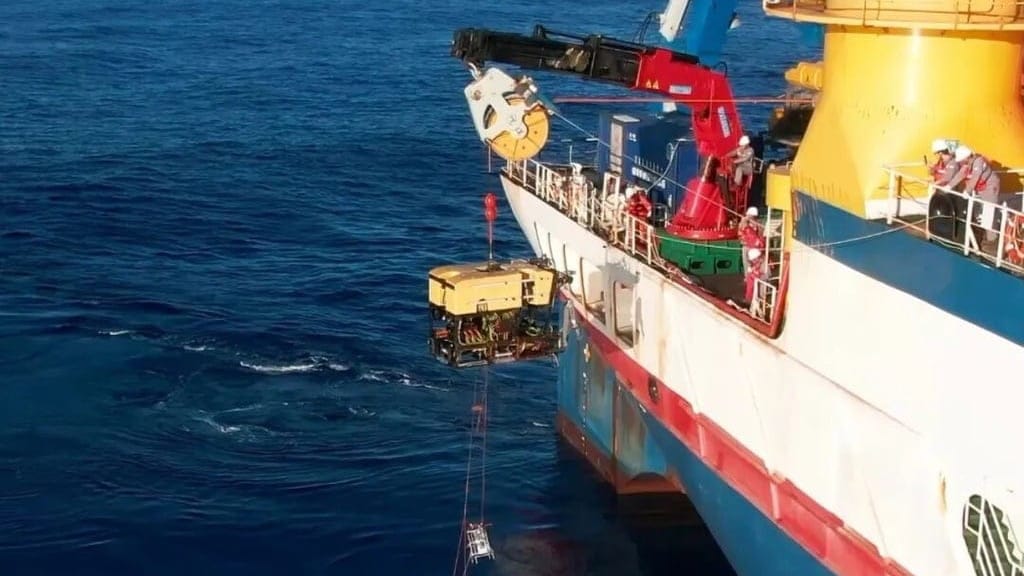
Kunpeng is a fish that, in Chinese mythology, transforms into a bird.
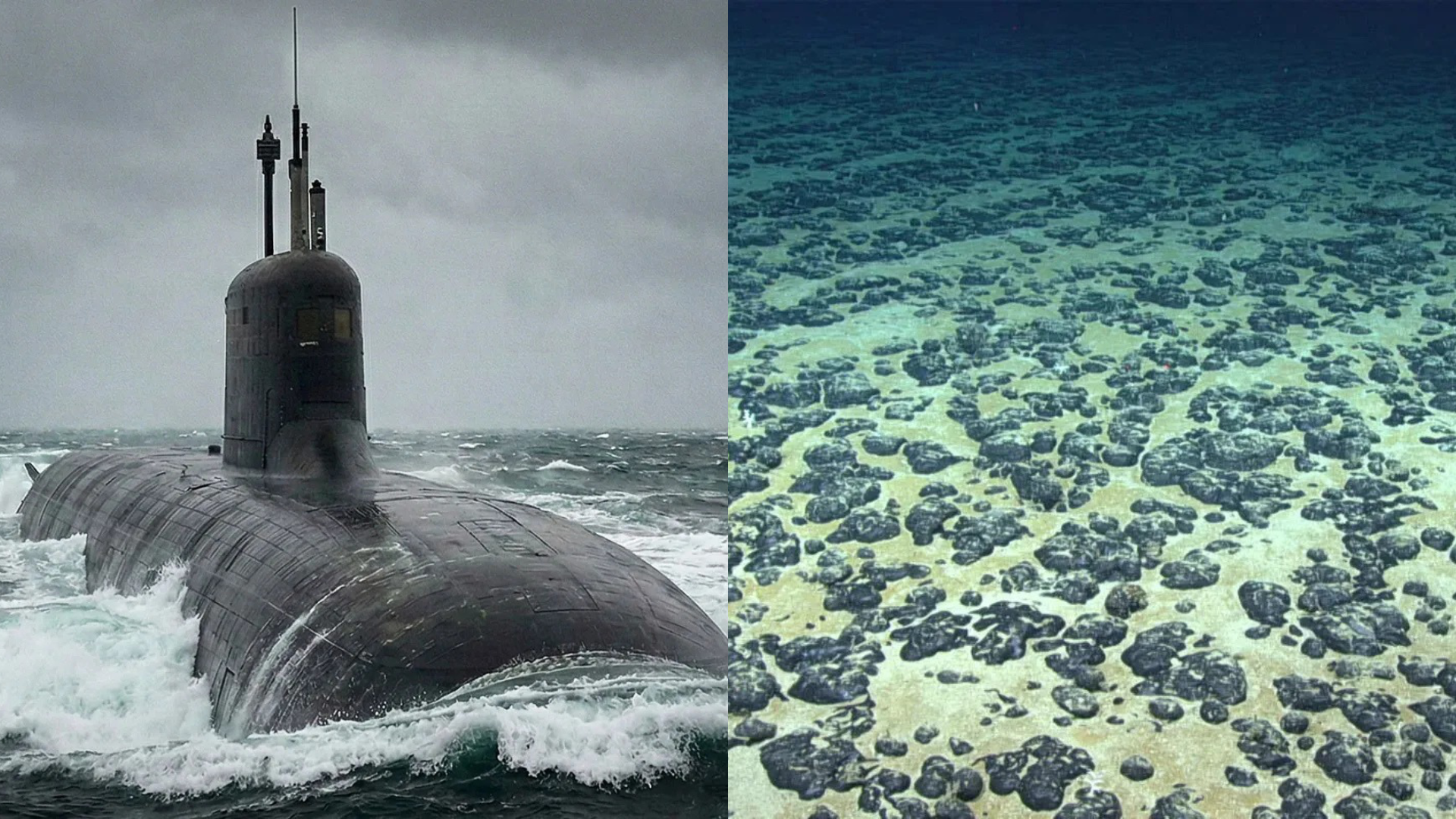
It is also the name of the robotic deep-sea submersible that, according to Chinese state media, has gathered an undisclosed quantity of potato-sized “polymetallic nodules” from depths exceeding 5,000 metres in the eastern Pacific. Those ancient nodules contain nickel, cobalt, manganese, and copper, alongside trace rare earth elements.
The trial, with a 1300 tonne wet-weight target, operated under a 15-year International Seabed Authority contract with China Minmetals, which since 2017 has explored the mineral-rich seabed of international waters in the ‘Clarion-Clipperton Zone’.
China is the largest funder of the International Seabed Authority (ISA).
A Pulitzer-backed investigation by Mongabay and CNN published in March found that the eight Chinese state-owned vessels conducting ISA-sanctioned research spent little time in their designated exploration zones, instead plying militarily strategic waters and ports along foreign coasts—suggesting Beijing’s scientific fleet doubles as a strategic reconnaissance asset.
Over the past several years, China has also negotiated seabed exploration pacts with Kiribati and the Cook Islands inside their Exclusive Economic Zones (EEZs).
President Trump, meanwhile, has taken an openly unilateral route. Bypassing international rules, he signed an executive order—Unleashing America’s Offshore Critical Minerals and Resources—to fast-track deep-seabed mining not for clean energy, but on national-security grounds.
The ISA Secretary-General warned Washington that applying domestic law to international seabed mining breaches international law.
Writing in the Lowy Institute’s The Interpreter, international law scholars Dr Bruno Arpi and Professor Donald Rothwell argued the US move sparked “a profound geopolitical and legal confrontation that fundamentally threatens the integrity of the law of the sea.”
Since the Reagan administration, the United States has remained one of the few countries never to ratify the 1982 UN Convention on the Law of the Sea (UNCLOS), which establishes that no nation holds sovereignty over deep-seabed resources and that activities there must benefit humankind as a whole.
Australia has repeatedly reaffirmed its commitment to UNCLOS—including directly in Anthony Albanese's Prime Ministerial statement just one day before his appearance alongside Trump.
At the same time, right before the Trump administration planned to hold a landmark auction of deep-sea mining leases across 31 million acres off American Samoa, US District Judge Jill Otake voided the deal's environmental approval under the Endangered Species Act. She found federal fisheries regulators “did not even attempt to consider” how heavy seabed machinery could destroy “nearly all life in its path” and harm endangered species.
That ruling—aligning with American Samoa’s 2024 mining moratorium and opposition from more than 45 countries—now casts doubt over a second US seabed lease auction scheduled off the Northern Mariana Islands in December.
So what do these sweeping declarations and shifting alliances mean at home in Australia?
Connor Graham, author of the Lowy Institute’s Pacific Islands Program report, Fault lines beneath the Blue Pacific: Deep-sea mining and the future of Pacific unity, noted that Australia has long avoided taking a firm stance on deep-seabed mining.
He said Australia’s ambivalence came at a cost
‘to Pacific unity, to the credibility of Australia's regional commitments, and to the governance of an ocean on which Australia and Pacific Island nations depend.”
Urging Canberra to “champion a Pacific-led regional governance framework,” Graham wrote:
“Australia cannot afford to abstain from this debate. Australia has the standing, the relationships, and the institutional presence to change those conditions.”
Deep-seabed reserves of critical minerals and rare earths are estimated to be worth up to $41 trillion—and Pacific Island nations are already deeply divided over whether to tap them.
Palau’s President, Surangel Whipps Jr., has called mining the Pacific floor “insanity” and urged other nations to “do everything we can to stop this.” His petition for a 10-year moratorium pending further scientific research has been backed by more than 700 international marine experts.
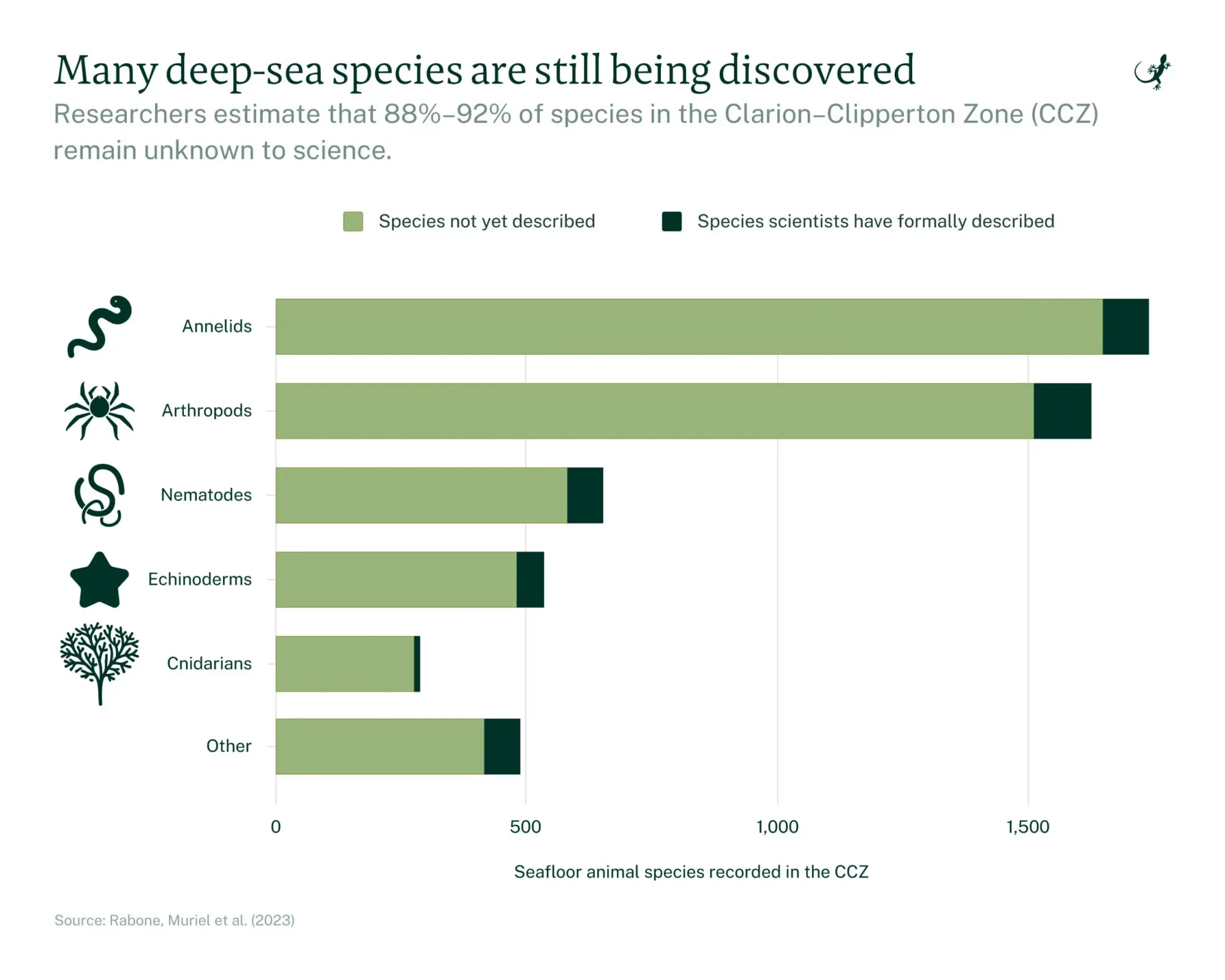
Only a quarter of the world’s oceans have been mapped, and biologists estimate 90 per cent of deep-sea species remain undiscovered. Scientists warn that sediment plumes kicked up by seabed mining could damage fish stocks and permanently scar the fragile abyssal plain. When researchers revisited the site of a 1979 nodule-mining test undertaken 5,000 metres down in the Clarion-Clipperton Zone, 44 years later, the tracks and ecological damage were still starkly visible.
Palau joined New Zealand, Fiji, Vanuatu, Samoa, the Federated States of Micronesia and Papua New Guinea in opposing deep-sea mining.
Four Pacific nations, by contrast, backed deep-sea mineral exploration: Kiribati, Naoero, Tonga and the Cook Islands.
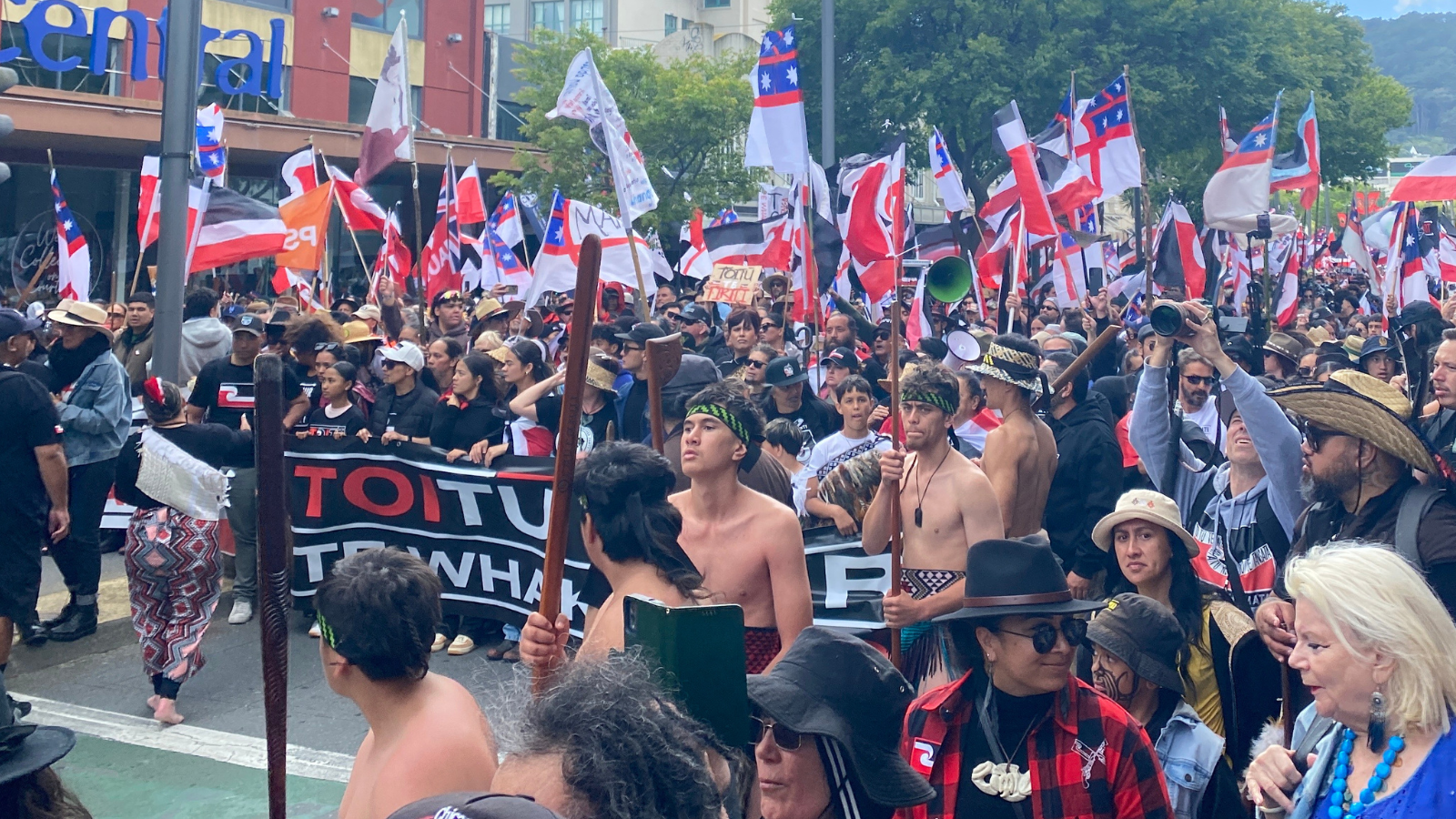
The Cook Islands—15 islands and atolls spanning an EEZ of 1.9 million square kilometres—entered seabed exploration talks with the US last August, having already signed a strategic deep-sea mining partnership with China in February. New Zealand froze development aid in protest, Cook Islanders rallied outside Parliament in Rarotonga over a lack of transparency, and Prime Minister Mark Brown narrowly survived a parliamentary vote of no confidence.
Former Australian prime minister Scott Morrison, however, argued the Cook Islands should be free to mine its seafloor to build a sovereign wealth fund.
Remember ScoMo? He’s the final piece of this deep-sea puzzle and its connection to AUKUS
Morrison spearheaded Australia’s pivot to nuclear-powered submarines, tearing up the conventional submarine contract with France and unveiling AUKUS in September 2021 alongside UK Prime Minister Boris Johnson and US President Joe Biden.
In the lead-up to that announcement, during Trump’s first term, Morrison also worked closely with then-US Secretary of State Mike Pompeo.
Interestingly, Morrison and Pompeo both went on to become strategic advisers for DYNE Critical Minerals, the US-based venture capital firm which invests in deep-sea mining projects in the Pacific. DYNE was specifically established to support the strategic goals of AUKUS. Morrison now chairs DYNE’s advisory board.
An investigation by NINE news found that within days of the AUKUS announcement in 2021, DYNE invested more than $5 million in plans to mine the deep seas around the Cook Islands, and committed to inject another $57 million.
Morrison, the former Liberal Party leader, also took a consulting position at the Seafloor Minerals Fund (SMF), a US firm aiming to invest US$400 million in deep-sea mining.
Reflecting on Morrison’s dual role as an architect of AUKUS and a promoter of deep-sea mining investment, Greenpeace senior investigator Jack Kerr remarked: “Deep-sea mining is pivoting from greenwashing to green beret.”
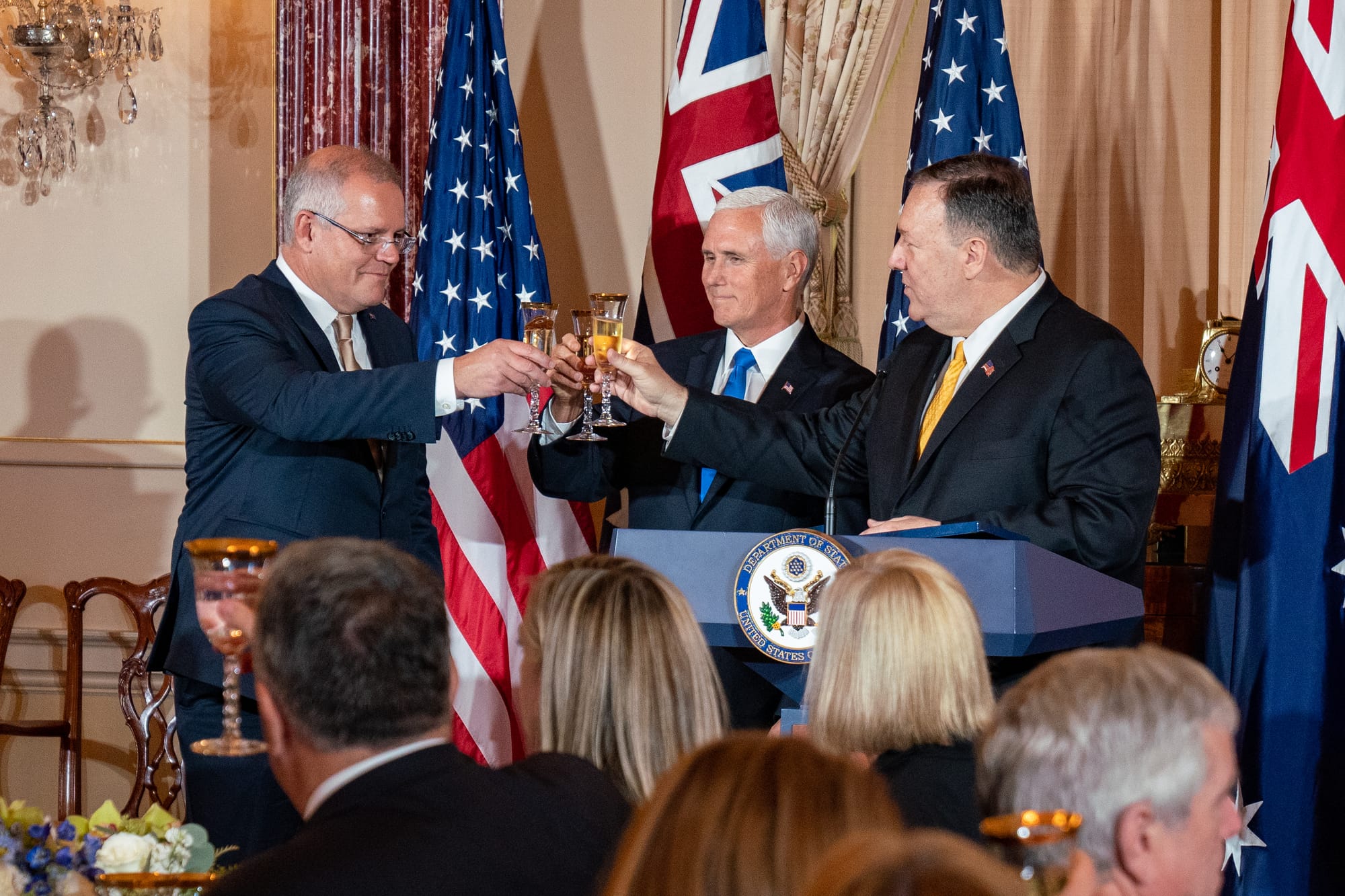
Australia’s struggle to reconcile its traditional Anglosphere alliances with the priorities of its Pacific neighbours was already strained by AUKUS.
“We have a very peaceful part of planet Earth, we want to protect that peace and serenity … but if such activities bring disharmony in the region then we have an issue,” Papua New Guinea’s Prime Minister James Marape warned after the AUKUS’s surprise unveiling in 2021.
Days later at the UN General Assembly, Fiji’s then-Prime Minister Frank Bainimarama was more blunt:
“If we can spend trillions on missiles, drones and nuclear submarines, we can fund climate action.”
Five years on, if Australia stays silent while the US and China turn the Pacific seafloor into a mining frontier and military flashpoint, it will not only sacrifice priceless deep-sea ecology, but also the regional peace that AUKUS was supposed to protect.