The man who founded the Greens just quit. Good.
After decades of working in nature, I finally joined the Greens. It’s the first political membership I’ve ever held.
But when Drew Hutton, one of three luminary activists who launched the Greens, made an angry and public exit from the party last week, to “give them a punch in the face”, I had to stop and reconsider my allegiances.
by Cat Holloway
I’m nearly 60 and without political ambitions to pursue or institutional loyalties to protect. So I can speak frankly in a way that more gracious and diplomatic sitting MPs probably cannot.
Drew Hutton’s departure from the Greens is no crisis. The party is better off without him. It’s Hutton I’m worried about.
I may be a political newbie, but as a mother of young adults, I understand something about nurturing things and watching them outgrow you. It's hard. You want to capture and hold on to the way they were when you created them.
But you overestimate your importance, eventually accepting that being a parent is like being a pizza - you are a stable delivery mechanism for good stuff piled loosely on top.
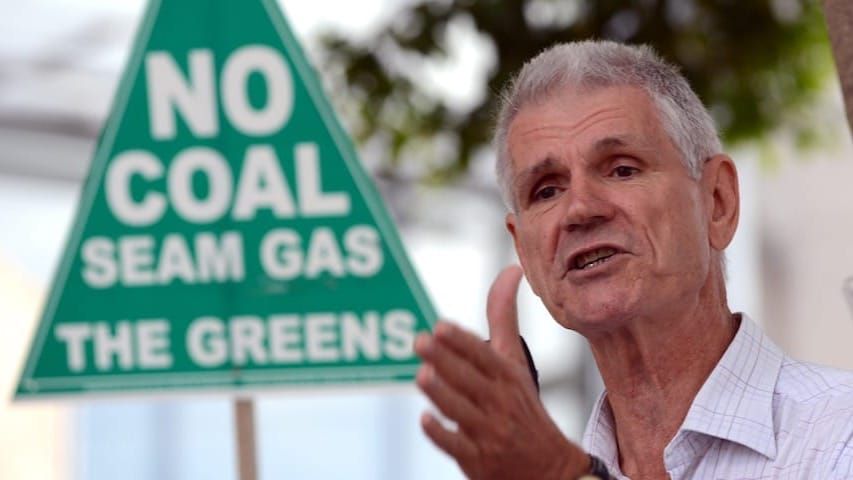
Hutton, 79, co-founder of the Queensland and Australian Greens, announced his resignation last week, just days after winning a legal battle to have his expelled membership reinstated.
The Greens settled before it went to court, reactivated Hutton’s membership and paid his legal costs.
But Hutton quit anyway, declaring to anyone who would listen that the Greens are a “repressive apparatus” captured by a cult of inner-city gender extremists who have abandoned the environmental mission to which he devoted his life.
Sounds like a bit of a conspiracy theory? Yeah, there’s a lot of that going around nowadays.
Hutton’s description of the Greens bears zero resemblance to my experience.
I’ve found my local Greens group in regional NSW to be focused on three things: elevating nature, peace and economic equality.
The only imposed gender ideology that I’ve come across has been Drew Hutton’s own obsession with the topic.
Before I take on the bizarre hypocrisy of Drew Hutton spruiking his Rally for Sex-Based Rights featuring guest speaker Pauline Hanson as ‘the political event of 2026’, I must pay respect to the opportunity Hutton’s Greens party gave to voting Australians who love this magnificent country and the planet on which it sits.
Co-founder Bob Brown described Hutton as “the finest parliamentarian Queensland never had”.
Beyond the Greens, Hutton’s Lock the Gate campaign was a brilliant alliance, uniting farmers, conservationists and Aboriginal communities against coal seam gas extraction, pushing aside usual political boundaries and producing real legislative outcomes.
Lock the Gate was community-based but ambitious, with broad appeal in confronting big corporate power using bold civil disobedience. It was reminiscent of the Greens’ early nation-defining campaigns for the Franklin River, the Daintree Rainforest and Kakadu National Park.
Like many cranky self-congratulatory boomers, Hutton seems now to want to relive the 80s, a time when the Greens were a pressure group nudging the major parties towards cleaner waterways and nuclear disarmament.
That Greens era was crucial. It’s why I often hear people, even Greens members and the well-meaning but ill-informed, say that the Greens should ‘just stick to the environment’.
Those days are long gone. The scale of the challenges we now face — ecological, economic and social — demands far more comprehensive structural vision than protest marches and wildlife posters.
The under-30s surge in Greens support is real, and it's happening well beyond Newtown and Fitzroy. Young educated people are not choosing Greens because they’re attracted to a cult of trans treehuggers. They're voting Green because they recognise that the systems failing them are interconnected.
Nobody has said it better than assassinated Amazon activist, Chico Mendes:
"Ecology without class struggle is gardening.”
The same extractive economic logic that poisons groundwater also endangers agriculture, hollows out regional services, and enables a tax system that favours the rich and keeps education and healthcare chronically underfunded.
Young people didn't arrive at this interconnected view through ideological capture — they arrived at it through lived experience.
They were raised under the cloud of simultaneous policy failures across many areas: housing affordability, tax injustice, water insecurity, food quality, global health crises, education debt, the circular economy, artificial intelligence and war.
These aren't distractions from environmental politics. They are environmental politics. They are all, at their foundation, about how we value and manage natural and public resources.
What pushed me through the Greens party door was pragmatism, not ideology.
Caring is no longer enough.
I’m looking at a future where even my fortunate kids will struggle to own a house. In my small hometown, I’m watching a mature forest of endangered gliders and a sensitive wetland be greedily cleared and carved up by land-banking investors. I’m reading divisive misinformation in heavily paywalled local news outlets owned by real estate companies. I’m seeing invasive mussels smother reefs in our local marine park because baseline science was ignored to shortcut false-profit predictions.
I'm also hearing people brazenly speak about Indigenous and immigrant Australians with a cruelty that I never thought would take root here.
I’m nostalgic and patriotic too, but not for the White Australia Policy and wives dressed to match kitchen appliances.
I miss abundant, biodiverse land and seascapes, healthy food, free education and the good-humoured Aussie kindness that gives everyone a fair go.
And I want to vote for political leaders who embody the scope and ambition that this moment demands.
You cannot plan an escape route simply by envisioning the light at the end of the tunnel. You need a strategy that combines ecological, economic and social reform.
Consider the debate surrounding ending native forestry in NSW. It’s as much about trees, climate resilience and species extinction as it is about workers’ rights and technological advances in timber processing.
More, Forestry NSW’s core failures are financial and legal. Ending the public subsidy of its criminal activity and massive waste demands politics broad enough to connect those dots.
Ecology underpins holistic solutions; it doesn’t sit off to one side in a special green box.
Drew Hutton should know that because the interdependence of planet, people and power is the fundamental tenet of the Green Party he birthed.
Which is why Hutton’s hypocrisy hits so hard. The platforms he has chosen to amplify his grievance are The Australian and Sky News.
As Murdoch's conservative capitalist flagships in Australia, those publishing platforms have, for 30-odd years, done more damage to climate science understanding and environmental advocacy than perhaps any other entities.
So, the man who says the Greens have abandoned their environmental principles is making his case under the mastheads responsible for trashing exactly those principles.
On Hutton’s staunchly anti-transgender opinions that triggered this brouhaha: he used his 'right to free speech' to escalate the issue and the language surrounding it.
That was his own choice, and he kept making choices very deliberately, giving himself a cause to weaponise against a movement that had exceeded him.
So twisted is his apparent desire for vengeance that he enthusiastically welcomes being used as a tool by those on the far right who despise everything he claims to still stand for - except the battle over public toilet access.
That tragic contradiction proves Drew Hutton is now driven more by personal hurt than political vision.
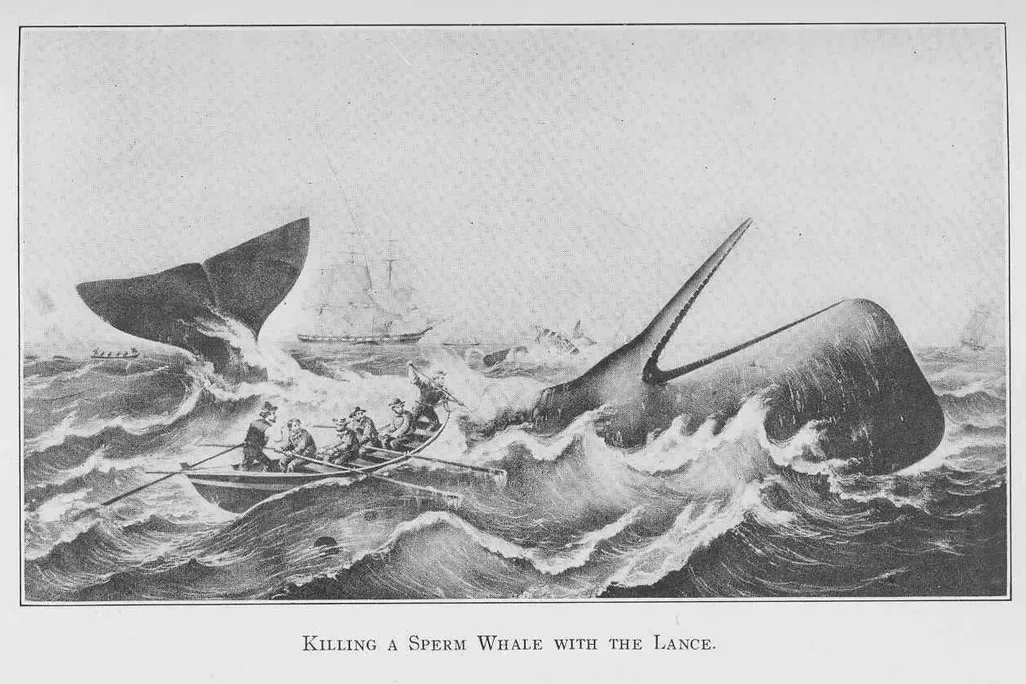
Hutton reminds me of Captain Ahab in Herman Melville's Moby-Dick, maniacally chasing a white whale whose malice he imagines, selfishly sinking his own hard-earned legacy and willing to take his crew down with him.